Project showcase
Timeline
Initial project:
6 months
(Feb - Jul 2023)
Project revamp:
4 months
(Mar-Jun 2025
Role
Product designer
Team
Product design lead
Product manager
UX Researchers
Engineers
Skills
Figma
User research
User testing
The bill payment experience was outdated and failed to meet modern online banking and accessibility expectations. With 150,000–200,000 monthly bill payments online, customers expect to be able to pay their bills online, but usability gaps resulted in customer drop-off and negative feedback, driving the need for a refreshed online experience.
HMW modernize the experience while also retaining it's core functionality that our customers rely on?
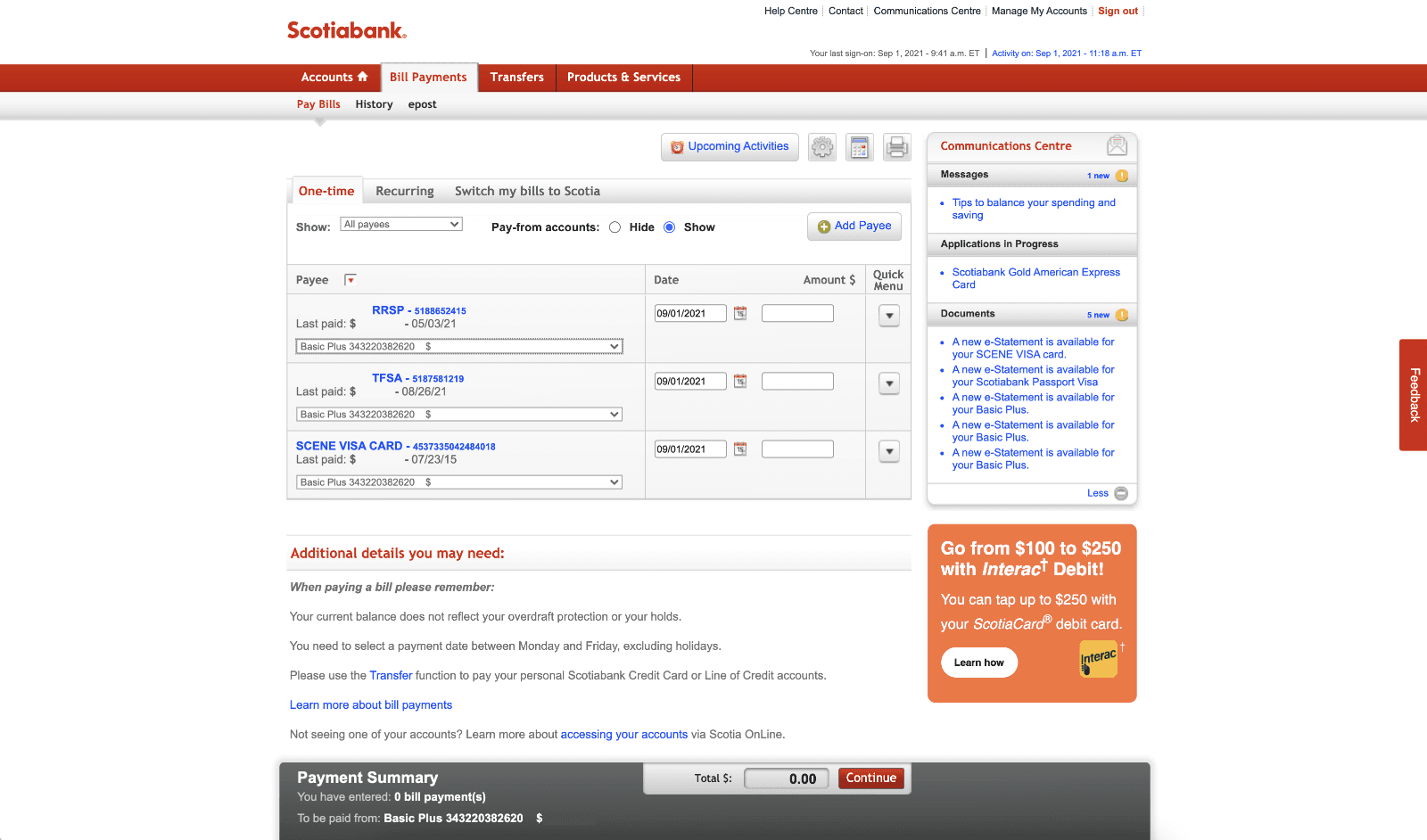
The old bill pay experience had inconsistent text styling, small click areas, and was bloated with irrelevant content.
Process breakdown
Surveyed the competitive landscape to understand market expectations and identify gaps in our experience
Validated design concepts by partnering with UX Research to A/B test prototypes with small sample size
Designed for both single and multi-bill payments simultaneously, ensuring the experience scaled without increasing complexity
Released feature to online banking platform and tracked usage data and feedback
First pass at the redesign
I led the modernization of the Bill Pay experience twice. In the first redesign, we prioritized competitive parity which led us to overlook customer requests. The solution modernized the UI and split the flow into four steps: select payee, enter payment details, review, and confirmation. While visually updated, the added steps introduced friction and led to a rise in customer complaints.
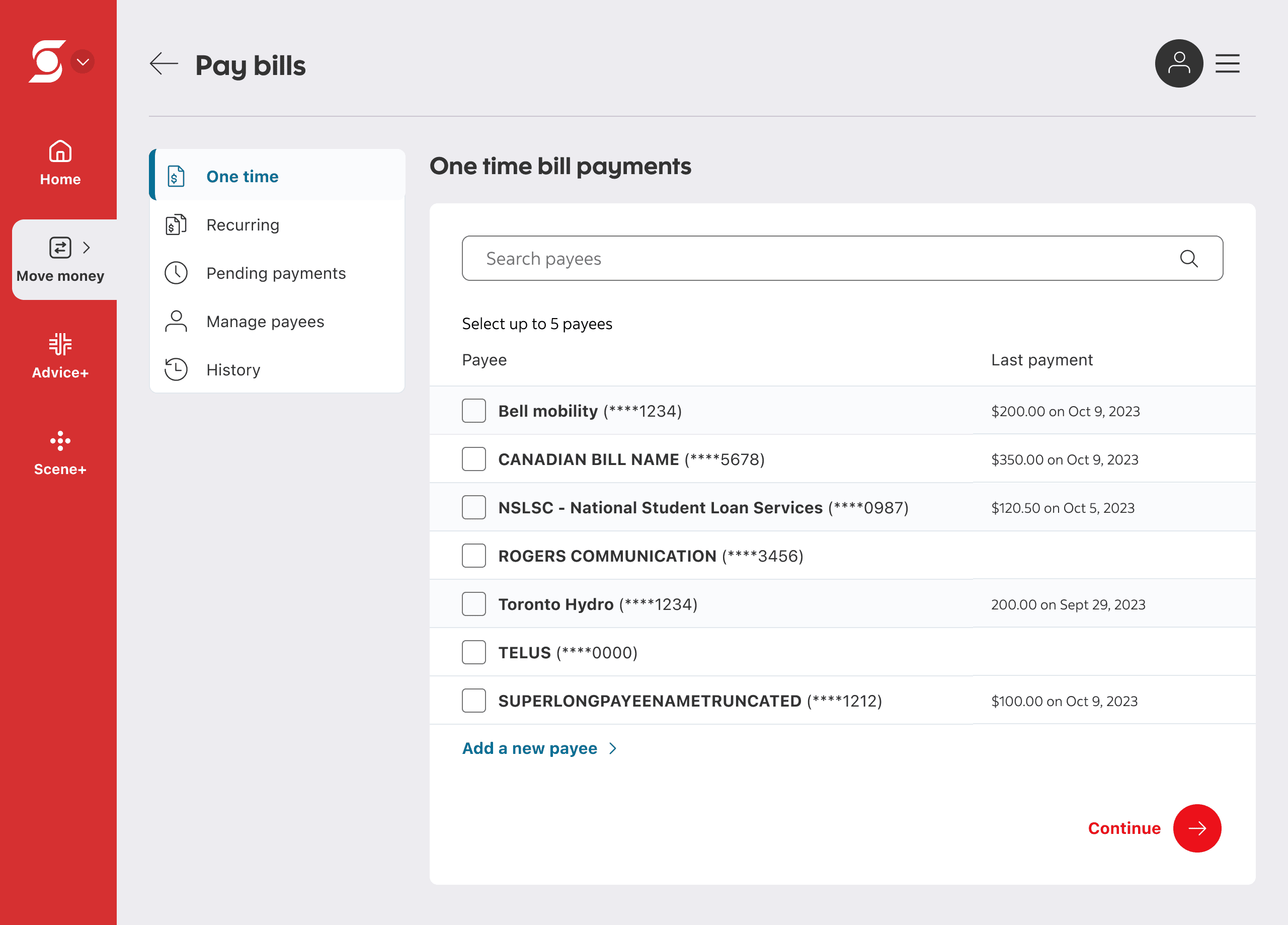
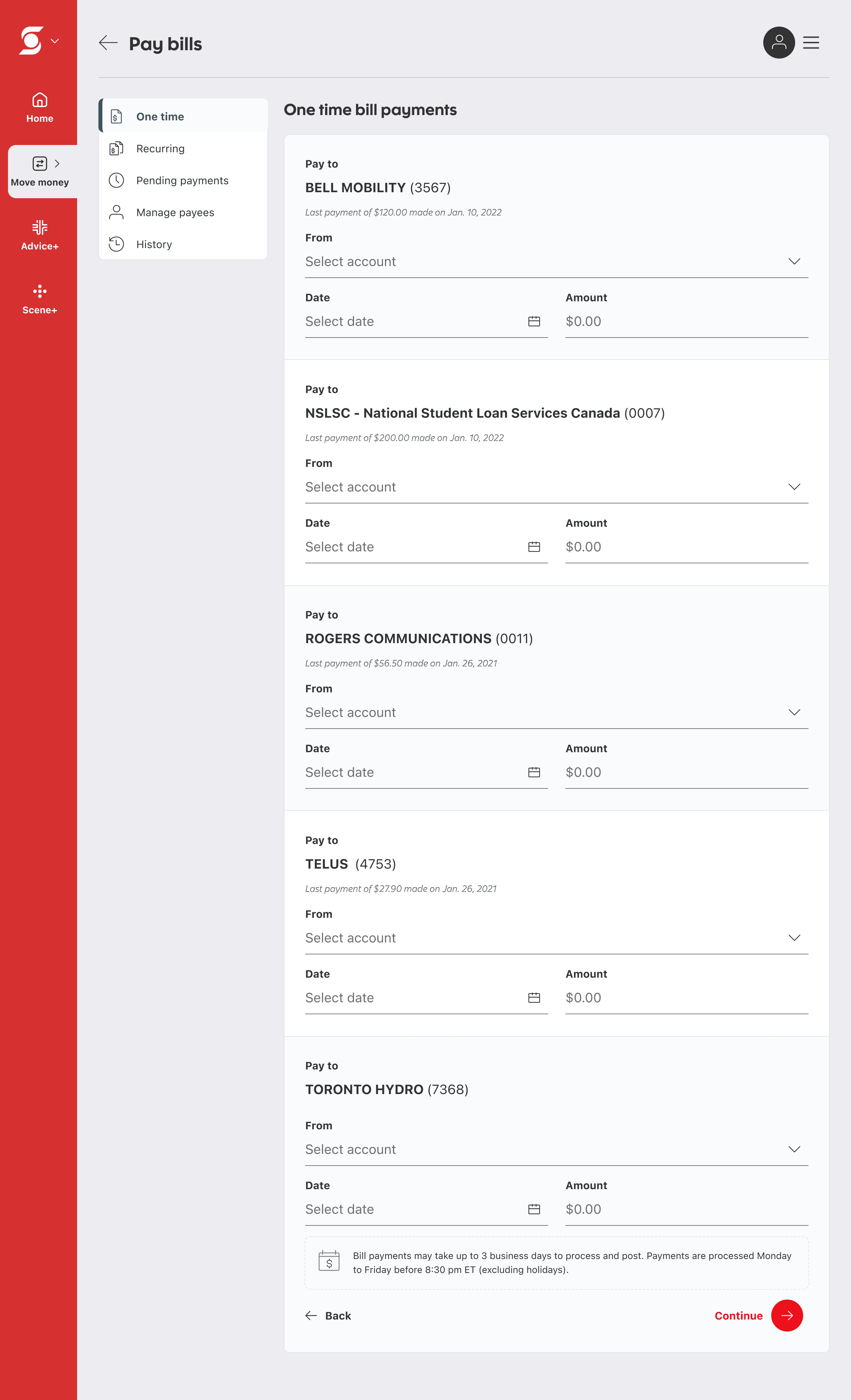
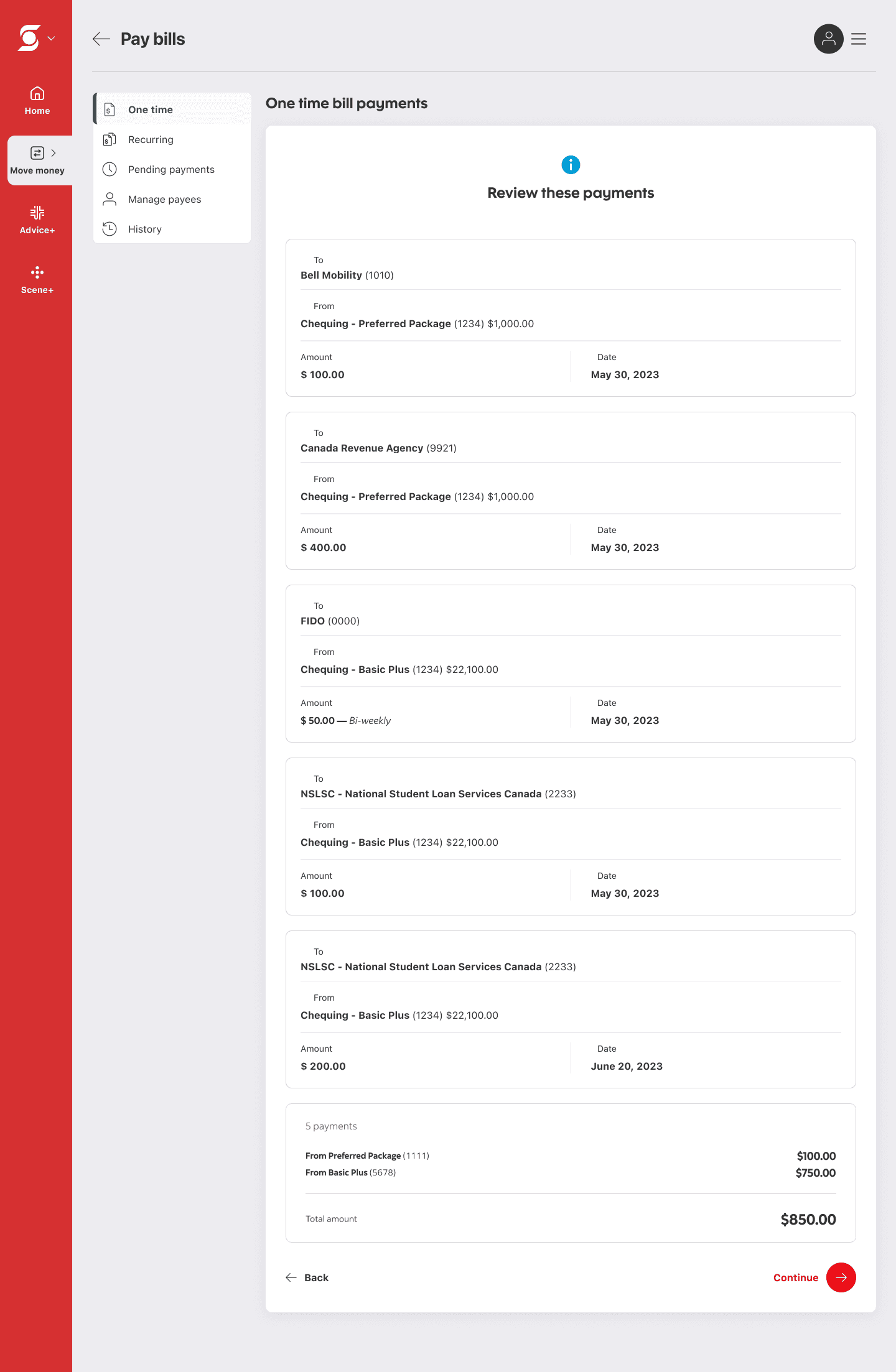
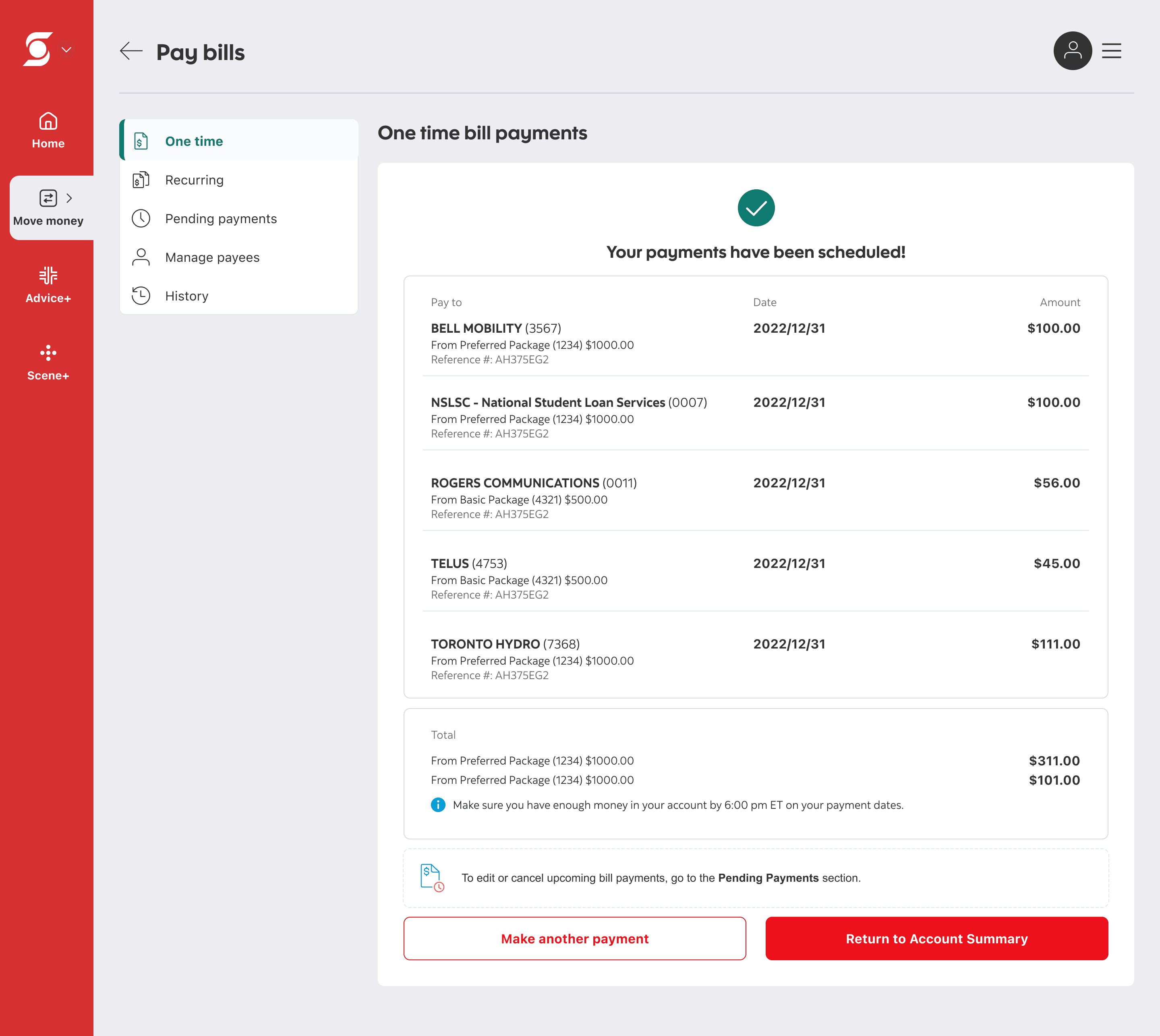
We split payee selection and payment details into two steps to match competitors, but our customers preferred the original consolidated experience.
Where we adjusted
I took ownership of the poor outcome and re-evaluated our approach. By grounding decisions in customer feedback and partnering closely with the design lead and the UX Research team, we redesigned the flow to better align with user expectations.
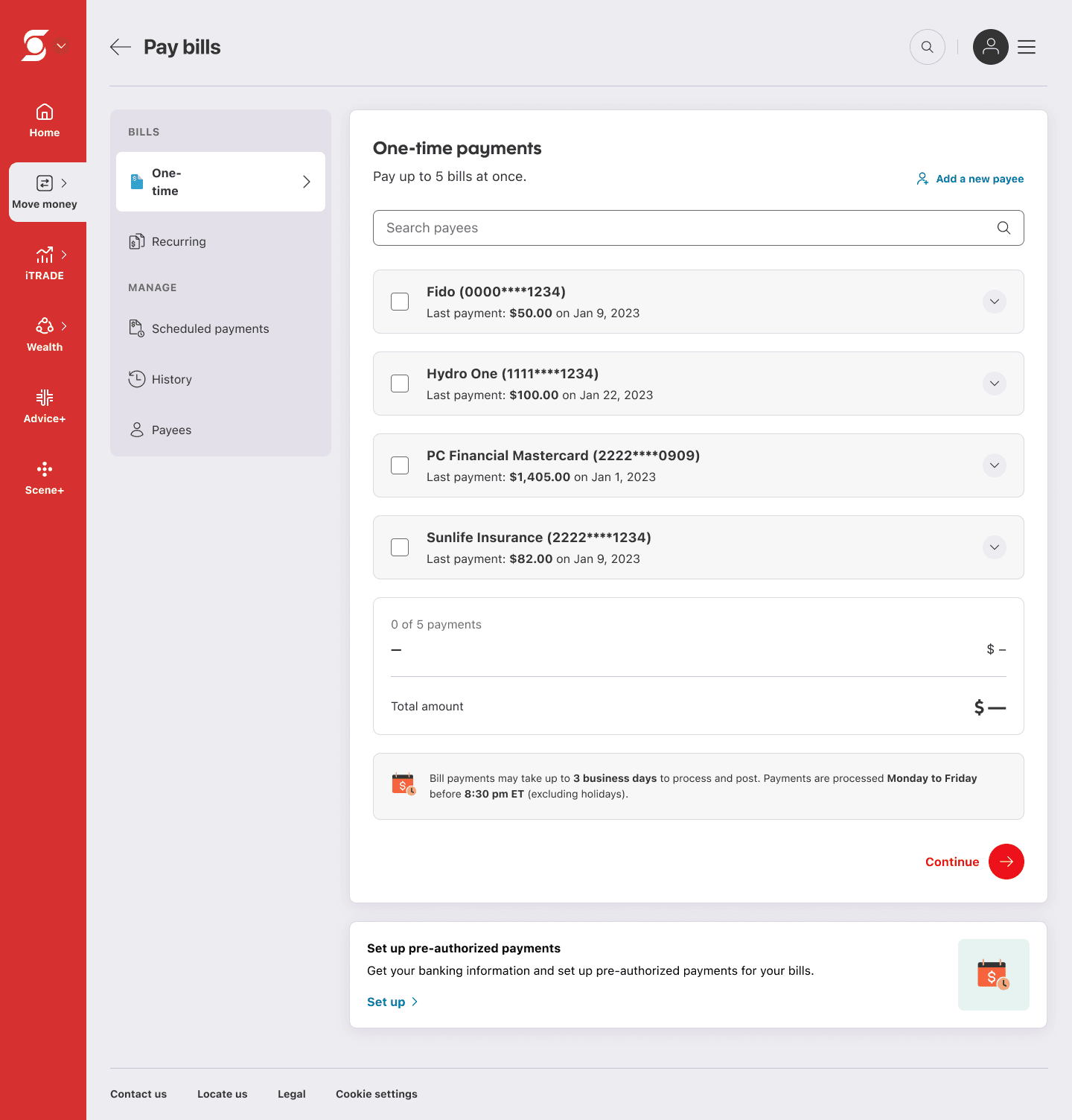
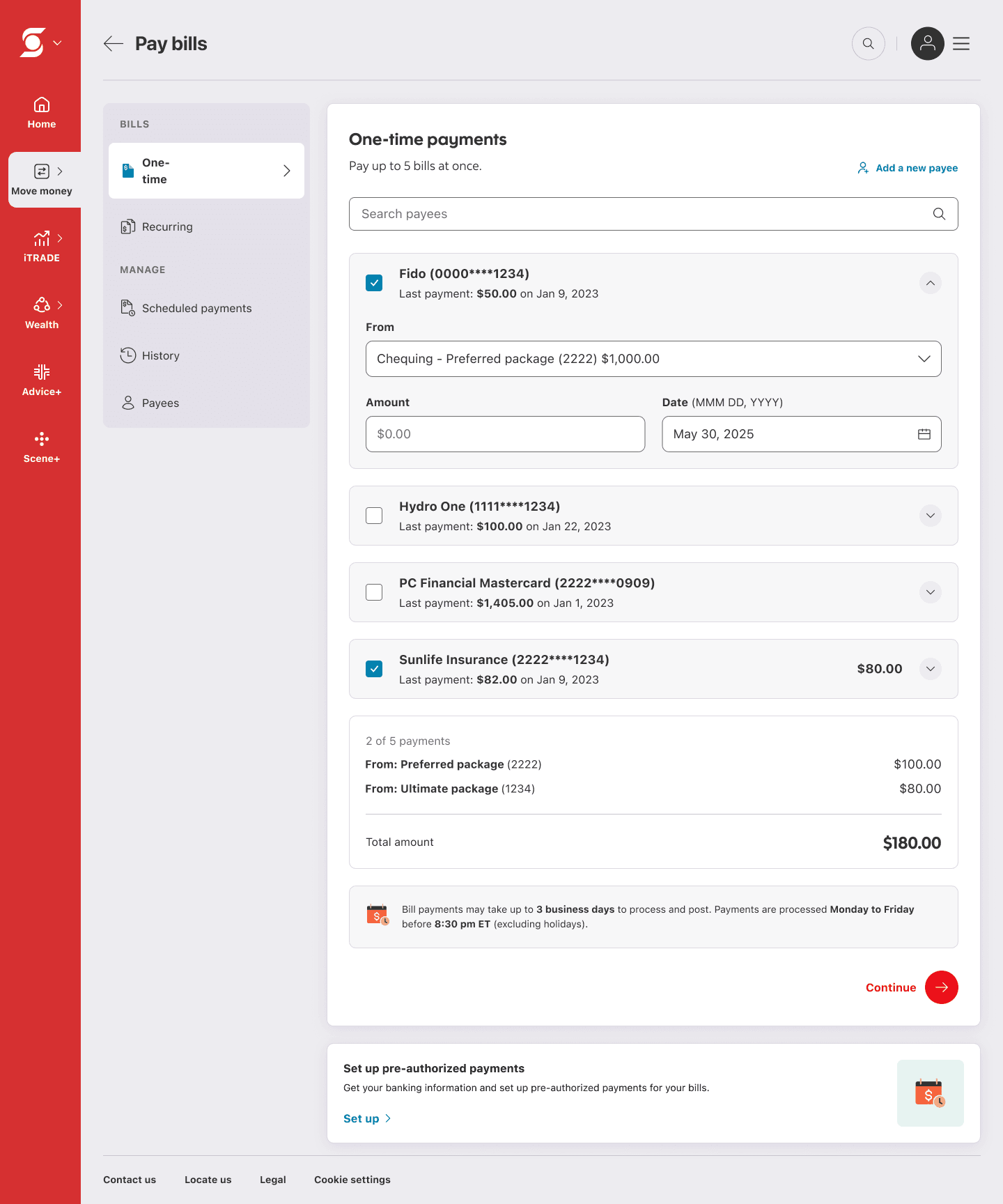
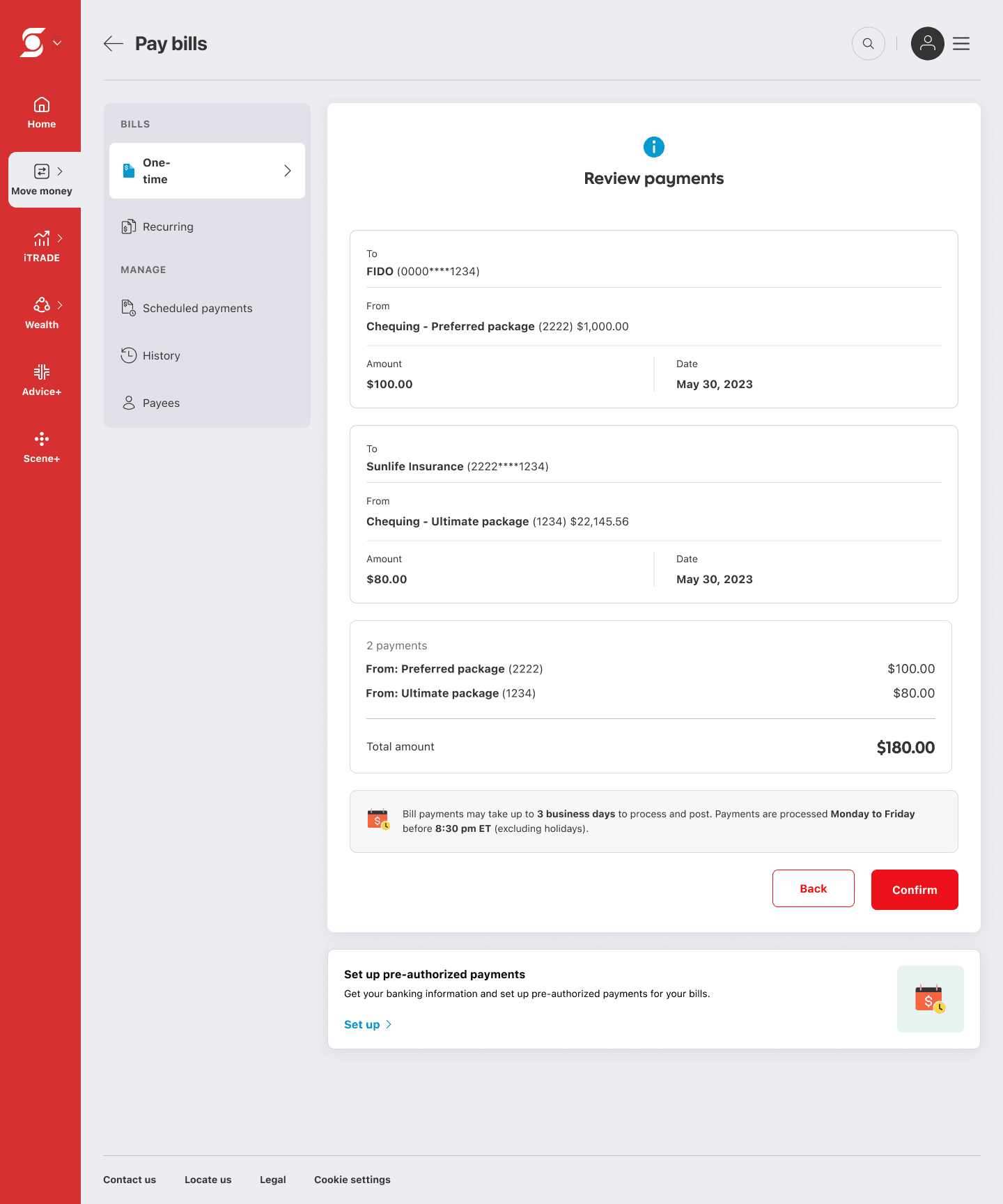
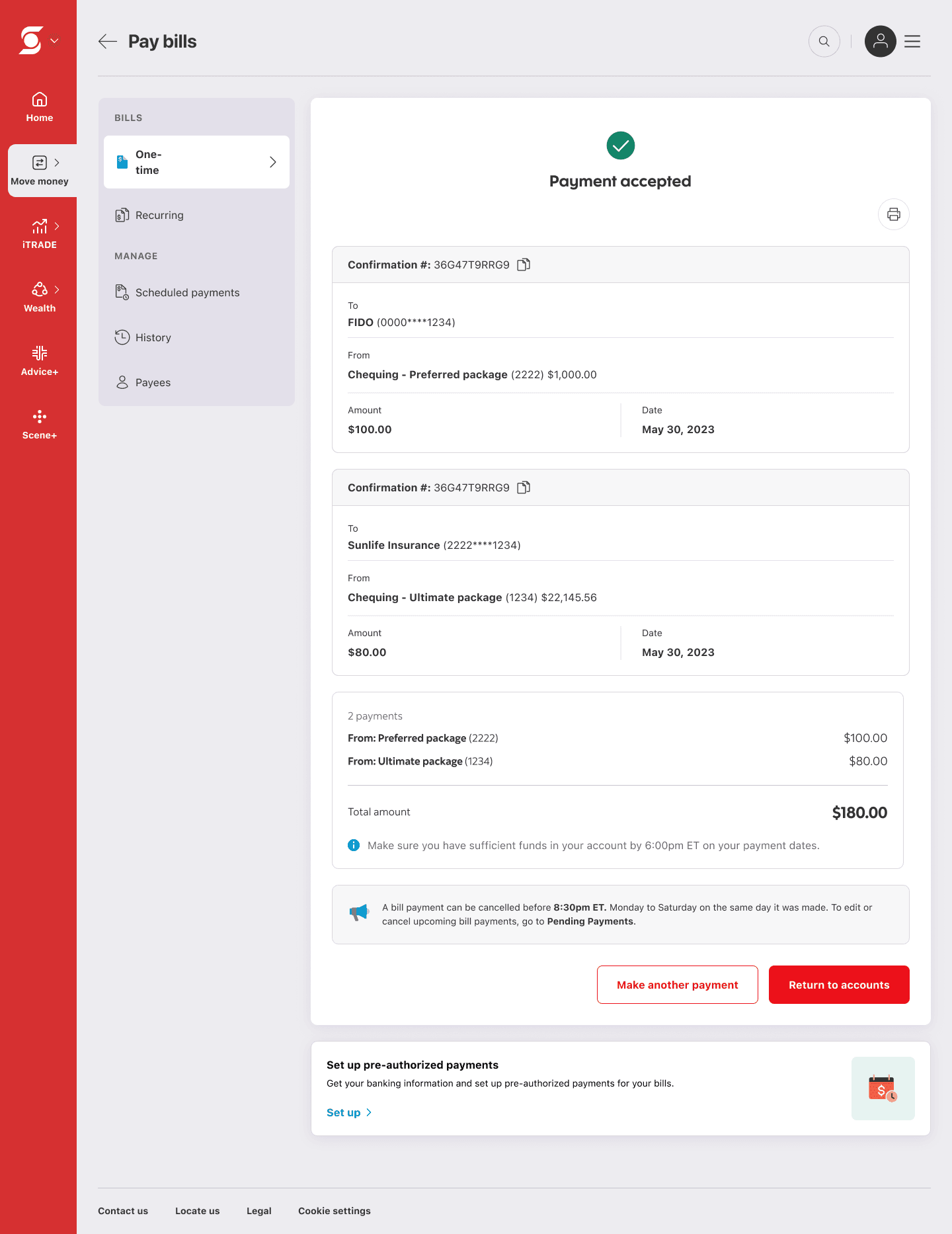
The final flow merged payee selection and payment details into one streamlined page, allowing customers to select payees and enter payment details in a single step. The simplified experience reduced friction and led to measurable improvements in NPS, customer satisfaction, and decreased drop-off at the payment details step.
Business impact
The modernized Bill Pay experience reduced customer complaints and improved customer satisfaction, increased ease of use, and boosted online bill payment completion rates.
NPS
7.2
+9.4 pts M/M from -2.2
Task easiness
8.4/10
+0.8 pts M/M from 7.6/10
Task completion
89.8%
+10.6% M/M from 79.%
Customer feedback
"I really like the way that the bill payments are set up. If I click on a bill I want to pay, it now lets me set up the amount and which account I want it to come from, instead of tediously making me go to another window and put all that info in. Thanks for the update."
monthly feedback report, June 2025
Lessons learned
🤔 Don’t blindly follow assumptions: Even when the research seems solid, it’s important not to take any single piece of advice as gospel. I was too quick to accept the research team’s recommendation without critically evaluating it against other data points and exploring additional alternatives. Design decisions should be based on multiple facets of input, not just one viewpoint.
🧪 Test Prototypes Thoroughly: Early in the design stage, it’s easy to assume we’ve “got it right” based on initial research. However, as I learned through the negative customer feedback, we should have conducted more user testing to validate our choices before finalizing the designs. This would have helped us identify issues early and avoid the costly and time-consuming process of revisiting major design elements later.
👩🏻🏫 Learn from Mistakes and Keep Improving: Ultimately, this experience reinforced the idea that mistakes are part of the design journey. Although the project didn’t go as smoothly as planned, the process of revisiting and refining the designs taught me invaluable lessons in humility, critical thinking, and adaptability. Moving forward, I’ll approach future projects with a more balanced, data-informed mindset and a deeper commitment to continuous improvement.